Beginnings
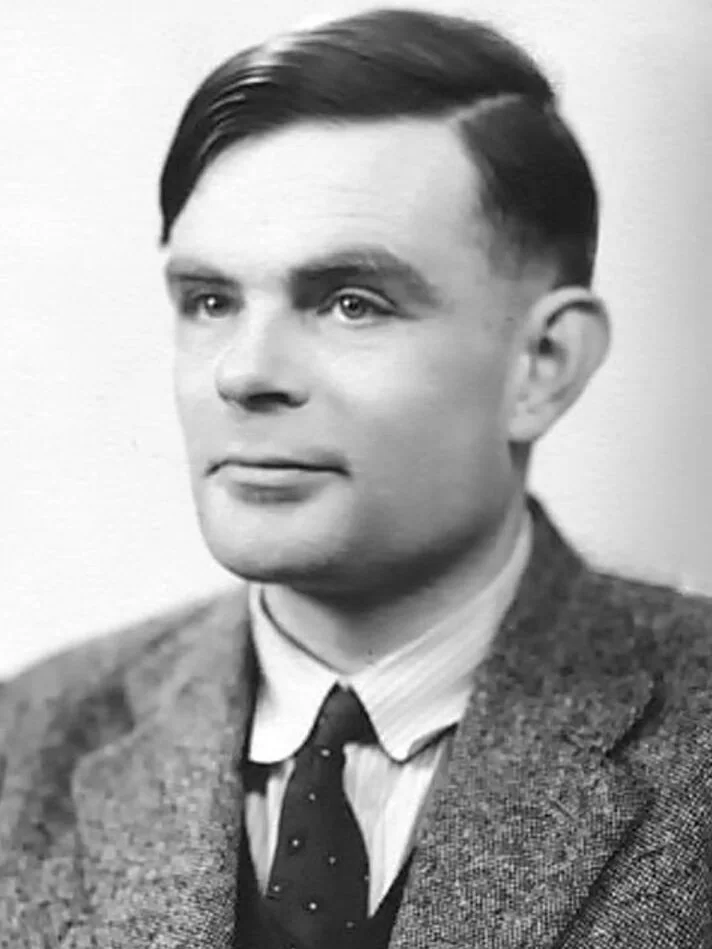
Alan Turing learned to trust patterns. As a schoolboy he pursued mathematics with unusual intensity and carried the memory of a close friend through much of his early life.
The search
His 1936 paper imagined a simple machine able to perform any describable computation. The abstraction became one of the foundations of computer science.
A turning point
At Bletchley Park, Turing and many colleagues built methods and machines to attack German naval encryption. Their secret work shortened uncertainty at an immense human moment.
What remained
After the war he explored early computers, artificial intelligence and mathematical biology. The same state he had served later prosecuted him for being gay and subjected him to hormonal treatment.
Afterlife
Turing died in 1954. A later apology and pardon could not restore his stolen years, but his questions—what can be computed, and can machines think—continue to shape the present.